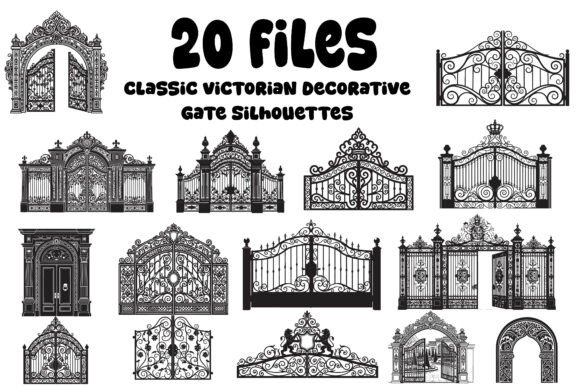
20 Classic Victorian Decorative Gate
A Designer’s First Glance: Grace, Not Gimmick
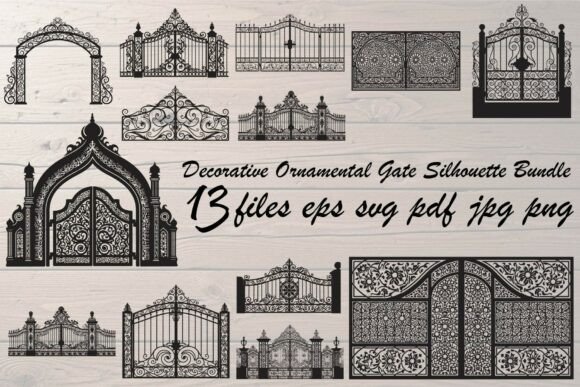
When I opened the 20 Classic Victorian Decorative Gate bundle, what struck me wasn’t just the ornate scrollwork—it was the quiet confidence in the line quality. These aren’t busy filler graphics; they’re deliberate silhouettes with rhythm, balance, and breathing room. Each gate design carries that unmistakable Victorian gravitas—curved finials, symmetrical lattice, subtle foliate flourishes—but avoids overcrowding. As an embroidery designer who’s stitched hundreds of decorative motifs, I immediately sensed this set would translate well to thread: clean outer edges, consistent stroke weight, and generous negative space between elements. That matters more than you’d think—especially when translating Illustrations into actual machine embroidery design.
Real-World Use: That Tote Bag Moment
Last week, I prepped a custom embroidered tote for a local boutique—a linen-cotton blend, medium-weight, natural tone. The client wanted “elegant but wearable,” not costume-y. I pulled up one of the mid-size gates from the 20 Classic Victorian Decorative Gate collection (the one with the arched top and paired acanthus scrolls) and sized it to 4.2” wide. On screen, it looked refined. But the real test came during stitching: no skipped stitches in the inner curves, no thread nesting at the tightest volutes, and the satin stitch borders held crisp definition without puckering. Customers noticed it—not as “vintagey,” but as *considered*. That’s the difference between decorative Graphics and functional embroidery assets.
Where It Shines—and Where to Pause
This bundle excels on stable, medium-to-heavy fabrics: canvas tote bags, cotton tea towels, structured aprons, and baby blanket corners. I’ve used smaller variants (under 3”) as delicate accents on nursery pillow covers—stitched in soft ecru on ivory linen, they read as heirloom-quality, not fussy. For custom apparel, go for the simpler, bolder gates on sweatshirts or denim jackets—avoid the most intricate ones on stretchy knits unless you’re using cutaway + topping stabilizer. On dark fabric? Test contrast first: some gates have fine interior lines that vanish in black thread on navy twill. And skip the densest designs for curved surfaces like caps—those tight inner scrolls won’t lay flat without serious digitizing tweaks.
What Buyers Actually Respond To
As an Etsy seller myself, I track which listings get saved, shared, or asked about. Designs from the 20 Classic Victorian Decorative Gate bundle consistently perform well in two categories: personalized gifts (think monogrammed gate + name on a baby onesie) and boutique merchandise (a single gate motif on a kitchen towel, sold as part of a “Heritage Linen” collection). Why? Because it reads as *handmade intention*, not clipart. Customers don’t say “pretty gate”—they say “this feels like something made for me.” That trust lifts perceived value, especially for handmade product buyers who pay more for authenticity.
Practical Notes Every Embroidery Designer Should Check
- Test before committing: Stitch one gate on scrap fabric matching your final project’s weight and weave. Watch how inner corners and thin bars behave.
- Stabilizer isn’t optional: Even medium-weight cotton needs tear-away + light cutaway for clean inner details. Skip it, and those elegant finials turn into fuzzy blobs.
- Thread color strategy: These designs thrive with tonal layering—try charcoal gray on oatmeal linen, or dusty rose on cream chambray. Avoid high-contrast combos unless the gate is large and simple.
- Hoop size reality check: Several gates scale beautifully down to 2.5”, but below that, interior details lose legibility. Know your smallest reliable hoop before resizing.
- Mockup wisely: View the digital embroidery file in both light and dark backgrounds—not just for color, but for visual weight. Some gates feel heavier digitally than they stitch.
- Licensing clarity: Since this is marketed as Graphics, confirm whether commercial use (e.g., selling finished embroidered patches or digital mockups) is permitted. When in doubt, contact the creator directly.
Beyond the Stitch: Brand & Business Fit
If you run a craft business centered on timeless, tactile goods—think botanical apothecary labels, heirloom baby items, or cottage-core home textiles—the 20 Classic Victorian Decorative Gate bundle quietly strengthens your aesthetic cohesion. It’s not trendy; it’s enduring. I’ve used one gate motif as a repeating border on printable gift tags, another as a focal point on an embroidered patch for a small shop’s loyalty program. In every case, it reinforced brand warmth without shouting. That subtlety builds recognition over time—customers start associating that graceful arch with your work, not just “vintage stuff.”
Final Thought: Design Judgment Over Decoration
There are dozens of ornamental gate graphics online. What makes the 20 Classic Victorian Decorative Gate bundle stand out isn’t novelty—it’s edit. Someone made thoughtful choices about line continuity, spacing, and scalability so it works *as embroidery*, not just as a pretty picture. Whether you’re stitching a personalized gift for a wedding, building a cohesive Etsy seller catalog, or creating commercial embroidery assets for clients, these designs earn their place because they respect the craft. They don’t ask you to fix them in the hoop—they invite you to execute them well.