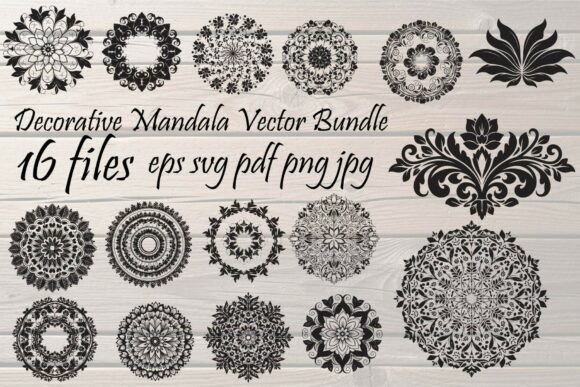
Decorative Mandala Bundle
A Designer’s First Look: Calm, Precise, and Ready for Stitching
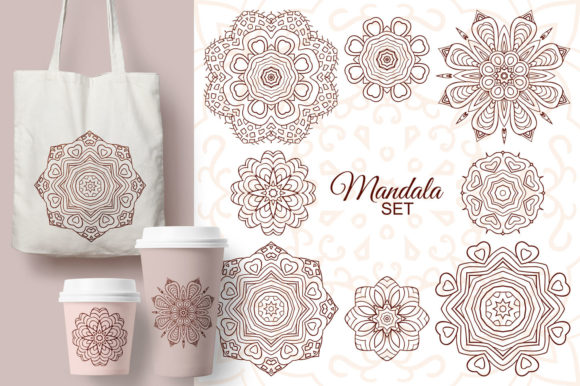
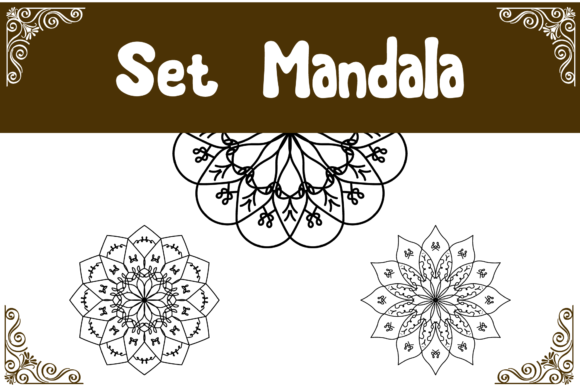
When I opened the Decorative Mandala Bundle, what struck me first wasn’t just symmetry—it was intention. These aren’t generic mandalas copied from stock libraries. Each one breathes balance: clean black vector lines, floral motifs that curve with quiet confidence, ornamental flourishes that suggest movement without clutter. As an embroidery designer who’s stitched hundreds of mandalas—from festival patches to nursery wall hangings—I immediately sensed this bundle leans into craftsmanship over trend-chasing. It feels like a toolkit, not a shortcut.
Where This Bundle Fits in Real Projects
Last week, I used one design from the Decorative Mandala Bundle to embroider a linen tea towel for a local boutique’s spring launch. We placed it centered on the lower corner—small enough to feel intentional, detailed enough to invite touch. Customers paused. They ran fingers over the stitching. That’s the quiet power of well-considered mandala work: it turns functional items into heirloom-adjacent objects. It works equally well on a baby onesie (soft fill stitch, minimal density), a cotton apron (clean satin stitch borders), or a structured tote bag (bold center motif with breathing room).
I’ve also tested it on a lightweight sweatshirt—medium-weight fleece, no stretch. The design held up beautifully when digitized carefully. No thread nesting, no distortion. But—and this matters—if you’re planning sweatshirt embroidery on heavier loopback fleece or a blended fabric with high shrinkage, don’t skip the stabilizer test. The Decorative Mandala Bundle’s intricate linework demands stability, especially where petals meet stems or concentric rings tighten toward the center.
What Works—and Where to Pause
The Decorative Mandala Bundle shines brightest on stable, medium-weight fabrics: quilting cotton, twill, canvas, linen, and midweight denim. It’s ideal for embroidered patch backing, tote bag design, and pillow cover accents. Its black vector style translates cleanly into stitch paths—no guesswork for digitizers, and no visual noise that competes with fabric texture.
But here’s where judgment matters: avoid using the most detailed designs from this bundle on caps or curved surfaces unless you’re confident in your hooping technique and underlay strategy. Tiny inner circles or tightly spaced filigree can blur on convex shapes. Likewise, on thin fabric like voile or rayon challis, reduce stitch density in your digitizing software—or choose a simpler mandala from the set. And if you’re working with dark fabric, remember: the original vector is black, but your thread colors will define contrast. Test white, ecru, or metallic gold against charcoal or navy before committing to a full run.
Small Hoop Sizes? Choose Wisely
Not every mandala in the Decorative Mandala Bundle fits neatly into a 4” hoop. Some span 5.5” or more. If your business relies on compact hoops—for quick turnaround on personalized gifts or craft fair orders—scan the preview files first. Prioritize the smaller, self-contained motifs. They’re often the most versatile: perfect for cuff embroidery, pocket accents, or mini patches sewn onto backpacks or denim jackets.
How It Elevates Your Handmade Product—and Your Customer’s Experience
There’s a subtle trust signal in a clean, balanced mandala. It tells your buyer: *This wasn’t rushed. This was chosen with care.* That matters whether you’re selling on Etsy, stocking a boutique, or gifting a custom holiday embroidery piece. The Decorative Mandala Bundle supports brand consistency—not by forcing uniformity, but by offering cohesive visual language. Use one mandala for your shop logo watermark, another as a repeat pattern on packaging tissue, a third as a standalone personalized gift on a kitchen towel. It feels unified, never repetitive.
And for digital product sellers: these are strong design assets. Because they’re vector-based Illustrations, they scale without loss—ideal for printable mockups, social media previews, or layered branding kits. Just remember: vector ≠ embroidery file. You’ll need to digitize each design thoughtfully. Don’t assume auto-digitizing software will honor the rhythm of those floral curves.
Practical Notes Every Embroidery Designer Should Keep Handy
- Always test on scrap fabric first—especially with textured weaves or blends. What looks crisp on screen may feather on burlap or soften on terry cloth.
- Check thread color contrast early. A deep burgundy mandala on black twill reads rich and grounded; pale yellow on ivory reads delicate and refined. Gray thread on gray fabric? Not so much.
- Review stitch density before stitching baby items or garments meant for frequent washing. Tight fills hold up—but can stiffen delicate fabrics. Looser fills breathe better but may lack definition.
- Confirm hoop size compatibility before digitizing. Some mandalas benefit from rotating placement to fit standard hoops.
- Inspect small details at actual stitch size. Those tiny leaves near the outer ring? They may need manual cleanup in your embroidery software to prevent skipped stitches.
- Test black-and-white mockups to gauge silhouette strength. If it reads clearly in grayscale, it’ll translate well across thread palettes and fabric tones.
- Use proper stabilizer—cutaway for knits, tear-away for stable wovens, and fusible for lightweight layers. The Decorative Mandala Bundle’s precision rewards attention here.
- Verify licensing before selling finished products or reselling digitized versions. As Graphics, these are design foundations—not plug-and-play embroidery files.
Final Thought: It’s Not Just a Pattern—It’s a Design Decision
The Decorative Mandala Bundle won’t fix weak digitizing or poor fabric choices. But in skilled hands, it becomes a quiet differentiator—elevating a simple tote bag design into something customers photograph and tag, turning a custom apparel order into a conversation starter, and giving your craft business a signature visual calm. It’s the kind of asset that grows more valuable the longer you use it—not because it’s flashy, but because it’s reliable, respectful of craft, and deeply attuned to how people actually experience handmade work.